
Introduction
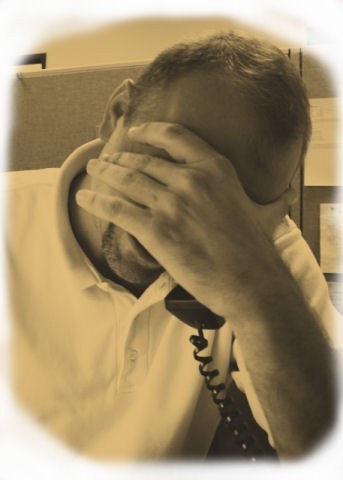
Complete relaxation may be possible for monks meditating for 8 hours a day but for those who must cope with traffic, work, financial stress, it is a bit more complicated. While stress can be motivational and can help us behave in adaptive ways., when it is “over activated” it becomes problematic.
Our stress system was originally created in an environment where even a momentary lapse could mean danger or even death. The same neural anatomy that saved us from predators is being used today when someone cuts you off in traffic. In our everyday lives, we rarely need to go into that stressful fight-or-flight response. Yet, we often do.
Symptoms of stress
This chart, adapted from the Mayo Clinic staff (2007) lists symptoms of stress in 3 categories: physical, emotional/thinking, and behavioral.
| Physical symptoms | Emotional symptoms | Behavioral symptoms |
|---|---|---|
| Headache | Anxiety or worry | Over or under eating |
| Chest pain, palpitations | Restlessness | Alcohol abuse |
| High blood pressure | Anger or irritability | Angry outbursts |
| Labored breathing | Depression | Drug abuse |
| Muscle or back aches | Mood swings | smoking |
| Jaw tension (teeth grinding) | Job dissatisfaction | Social withdrawal |
| Stomach upset | Feeling insecure | Relationship conflicts |
| Constipation or diarrhea | Confusion | Tearfulness |
| Increased sweating | Forgetfulness | Lower productivity |
| fatigue | Resentment | |
| Sleep disturbances | Inability to concentrate | |
| Sexuality disturbances | Loss of motivation | |
| Weight gain or loss | Negativity | |
| Skin breakouts |
What stress can do
The list of ailments caused or exacerbated by stress, both emotional and physical, is daunting. From the Journal of Counseling & Development, Winter 2008 edition:
Unmanaged chronic stress can have deleterious effects on the physical and psychological health of individuals. Stress may lead to or worsen disorders and diseases such as heart disease, anxiety, depression, hypertension, substance abuse, and gastrointestinal disorders (Astin, 1997; Brennan & Moos, 1990; Levy, Cain, Jarrett, & Heitkemper, 1997; D. Shapiro & Goldstein, 1982; Treiber et al., 1993; Whitehead, 1992). Stress is also a contributing factor for lifestyle behaviors that increase vulnerability to diseases such as lung cancer, cardiovascular disease, and obesity (Brennan & Moos, 1990; Roth & Robbins, 2004; Treiber et al., 1993; D. R. Williams, 1999).
In addition, stress during pregnancy presents risks to the developing fetus (see the Early childhood and the ability to cope with trauma for details). Add all these risks together and it becomes clear why it is essential to have strategies to reduce stress.
Techniques to avoid and manage stress
There are a large number of stress management techniques. The ones shown here are a subset of all the possible interventions. To learn more, go to the recommended reading section.
Avoid the stressful situation if you can
Consider this example. A man has an accident at a busy intersection. Whenever he goes back to that intersection, he felt a deal of great anxiety remembering the curve which made it hard to see oncoming cars. Someone asked him if he could take another route. He replied “Sure, there a few different routes.” Then it occurred to him to just avoid that intersection. It will not always be possible to avoid stressful situations but in those fortunate times when it is, take advantage!
Forgive past hurts
You may have been a loyal employee to company that summarily laid you off and the anger to cope with. While understandable, holding on to that anger will only make you continue to suffer and will not affect those who hurt you. To quote Malachy McCourt, “Resentment is like taking poison and waiting for the other person to die.” There are scores of books written about forgiveness. One technique is to write a scathing letter (not to be mailed!), then ask a few trusted friends or family to witness you burn that letter.
Avoid over committing your time
We each have to balance demands on our time that come from competing areas of our lives (employment, family, leisure, friends, etc.).
Over committing your time will result in stress. If you already have a demanding job or a lengthy commute, your time and energy are already constrained. You should consider requests on your time carefully. It is a perfectly reasonable thing to say that “I would love to help you but I can’t at this time.” You could offer alternatives such as “I can help you when things calm down at work” or “I am vacation in two weeks, I’ll come over then.” Agreeing to add optional tasks to an already busy life is bound to increase your stress. Here is more information about boundaries.
Use problem solving skills
You just got a ticket because you forgot to get your car inspected on time. Whether you use a paper calendar or an electronic organizer, place next years inspection date on the calendar! This is a basic example of using problem solving skills to reduce stress. If you look at the stressors in your life, see if you can use problem solving techniques to reduce the stress that they produce.
Take a different perspective
You’re mother in law is going to be visiting for a week and she likes to criticize your cooking. You feel you’re stress building as you start to imagine all the comments like “did you need this much salt in the soup?”
If you can’t get her to modify her behavior, you can change the way you look at it. For example, keep a count of the criticisms and try and guess how many she will make each day and how many in total. If it is OK to share this with your husband or a trusted friend, let them make guesses too. By making a game out of it, it will be easier to tolerate.
Share with a friend (this includes furry friends)
Friendship is born at that moment when one person says to another: "What! You, too? Thought I was the only one."
C.S. Lewis
Stressors are common human experience and they become lighter when shared. Calling a friend to tell of a hard day or enjoying the company of a beloved pet are two important ways to reduce stress.
Acceptance is not endorsement
That means that you can accept what is (intellectually and emotionally) without endorsing it. For example, you’ve just your third cold this winter. This might really frustrate you. “How can get sick so often?” you might ask yourself. Or “this isn’t fair!”
Arguing with reality or saying “I will not accept this” is as understandable as it is futile. Reality, as you have no doubt learned, will not be denied. The sooner you can accept what is, the better it will be for you. You eliminate the stress that comes from what you wanted to happen and what did happen. This is summed up in the ageless wisdom of the Serenity prayer: “God grant me the serenity to accept the things I cannot change; courage to change the things I can; and wisdom to know the difference”.
Mindfulness for stress reduction
Most of us spend the majority of our thoughts imagining the future or reviewing the past. Whether the view of the past brings pride or regret and whether the view of the future is hopeful or fearful; living in either time takes us out of the moment. The here and now is sacrificed in favor of a long gone past or an imagined future. In the book “Wherever you go, there you are,” Jon Kabat-Zinn defines the concept of mindfulness:
Mindfulness means paying attention in a particular way: on purpose, in the present moment, and nonjudgmentally. This kind of attention nurtures greater awareness, clarity, and acceptance of present-moment reality. It wakes us up to the fact that our lives unfold only in moments. If we are not fully present for many of those moments, we may not only miss what is most valuable in our lives but also fail to realize the richness and the depth of our possibilities for growth and transformation. (1994)
A survey of research on the effectiveness of mindfulness in stress reduction suggests that it is an effective technique (Grossman P, Niemann L, Schmidt S, Walach H, 2004).
But perhaps the best test is to try it yourself. When you are doing something that does not require your attention (e.g., as a passenger in a car), just notice your thoughts and observations. You will probably be thinking of things you have to do or things you have done. Try bringing your focus or attention to the scenery, paying careful attention to shapes, colors. If you see people, note your reaction to them. Now, try to see just what is, in other words, imagine you were a movie camera. You just record but make no judgment or evaluation. Or, imagine what an infant would see. If you can manage that, even for a few moments, you have experienced a form of mindfulness.
Conclusion
Stress is a part of living but it is worth making an effort to minimize it in every way possible. Lowering your stress will help your relationships, as well as helping you emotionally and physically.
So go ahead, take that 5 minute walk, clear your mind or pet your dog. You’ll be glad you did.
References
- Grossman P, Niemann L, Schmidt S, Walach H (2004 ). Mindfulness-based stress reduction and health benefits. A meta-analysis. Journal of Psychosomatic Research 57. pp. 35–43
- Kabat-Zinn J (1994) Wherever You Go, There You Are: Mindfulness Meditation in Everyday Life. New York: Hyperion.
- Mayo Cinic Staff (2007). Stress symptoms. Retrieved June 9, 2008, from http://www.mayoclinic.com/health/stress-symptoms/SR00008_D.
- Mitchell S (1998). Tao Te Ching. New York: Harper Collins.
- Schure M, Christopher J, Christopher S (2008). Mind–Body Medicine and the Art of Self-Care: Teaching Mindfulness to Counseling Students Through Yoga, Meditation, and Qigong. Journal of Counseling & Development, 86: pp.47-56.
Recommended reading
- On forgiveness:
- Left to Tell: Discovering God Amidst the Rwandan Holocaust
A bestseller about a woman who survived the Rwandan holocaust and her path to forgiveness. - The Art of Forgiveness, Lovingkindness, and Peace
A beautifully written, easy to read discourse on the path to forgiveness. - On using mindfulness to reduce stress:
- Full Catastrophe Living: Using the Wisdom of Your Body and Mind to Face Stress, Pain, and Illness
© 2008 Adaptive Therapy, All rights reserved